
Most people hand over the keys, receive their payment, and never think about the car again, which is completely understandable. But the process that happens after collection is actually quite involved, and for a lot of people, knowing the detail matters, whether for environmental reasons, peace of mind, or just plain curiosity.
Once our work providing the best car scrapping services is done, it does not simply get crushed and dumped in a landfill. Modern vehicle recycling is heavily regulated and, done properly, results in roughly 85 to 95 percent of the vehicle’s materials being recovered and reused. The process is broken down into several distinct stages, each handled by specialist equipment and trained staff at an Authorised Treatment Facility (ATF).
Here is what actually happens, step by step, from the moment your car arrives at the facility.
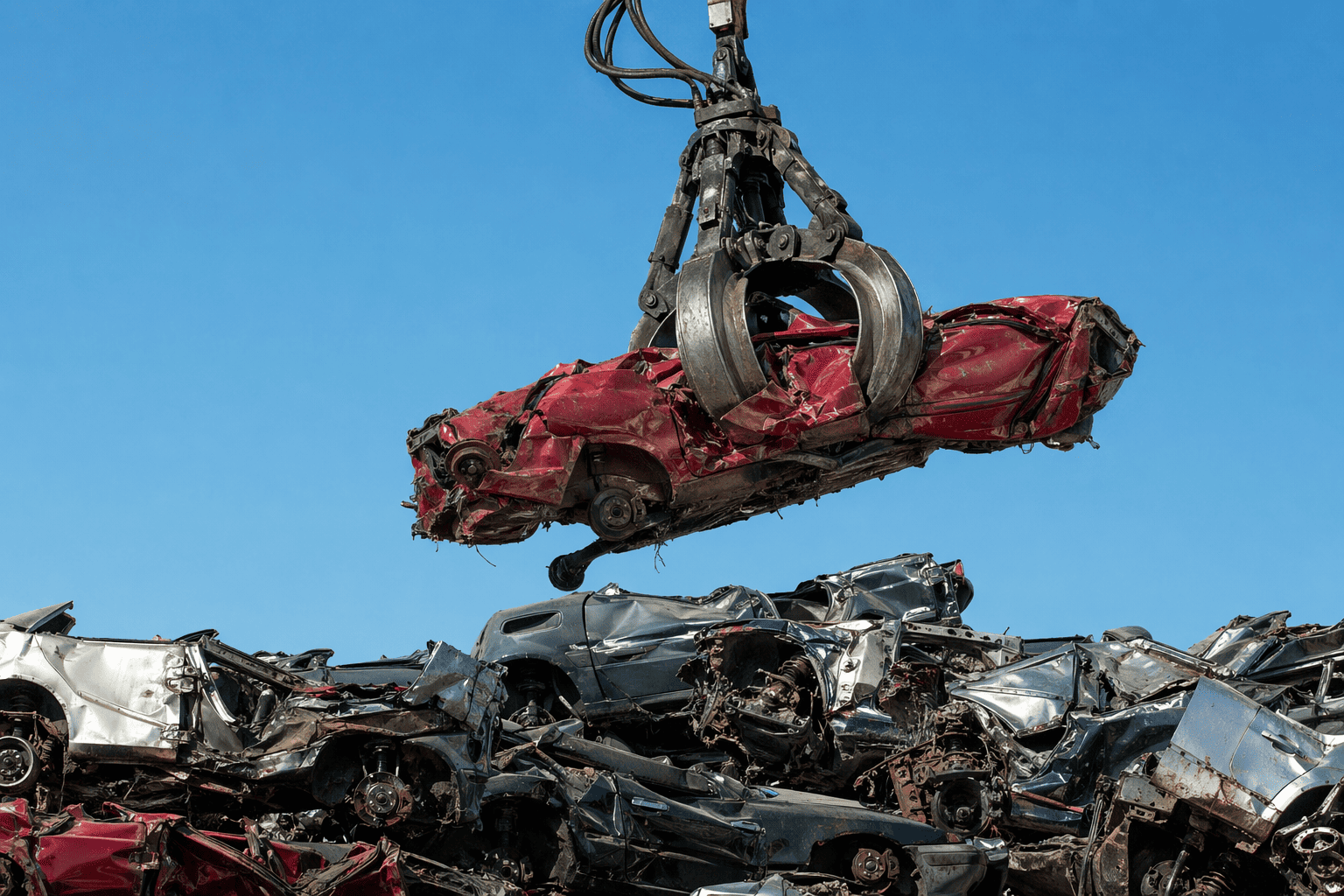
Stage One: Vehicle Inspection and Depollution
The first thing that happens when a vehicle arrives at an ATF is a full inspection. Staff will check the vehicle against the documentation provided, confirm the registration, and log it into their system. This is also when they will issue or begin the process of issuing the Certificate of Destruction (CoD), the legal document that formally removes the vehicle from the road.
Once logged, the car goes through depollution. This is arguably the most important stage from an environmental standpoint, and it is also the stage that separates legitimate ATFs from backstreet operations.
What Depollution Actually Involves
Depollution means the safe removal of all hazardous and environmentally harmful fluids and components before the vehicle is dismantled or crushed. This includes:
- Engine oil and transmission fluid
- Brake fluid and power steering fluid
- Coolant and antifreeze
- Fuel, whether petrol, diesel, or AdBlue
- Air conditioning refrigerant (requires specialist recovery equipment)
- Battery acid from the 12V battery, and high-voltage battery packs in hybrid or electric vehicles
Each of these fluids is either disposed of through licensed channels or, in the case of some oils and coolant, processed and recycled. The airbag inflators and seat belt pre-tensioners, which contain small explosive charges, are also carefully deactivated at this stage. Letting those go through a shredder is exactly as bad an idea as it sounds.
Under the End of Life Vehicles (ELV) Regulations 2003, all UK ATFs are legally required to complete depollution before any further processing. This is one of the reasons it matters which facility you use. Unregulated operators skip this stage entirely, which creates both an environmental hazard and a legal liability.
Stage Two: Parts Dismantling and Reuse
Once depolluted, the vehicle moves to the dismantling stage. Not everything on a scrapped car is worthless. In fact, a significant proportion of components are removed, tested, and resold as used parts rather than recycled as raw material.
The parts most commonly salvaged include:
- Engines and gearboxes (if mechanically sound)
- Alternators, starters, and other electrical components
- Body panels, doors, and glass in good condition
- Catalytic converters, which contain recoverable precious metals
- Wheels, tyres, and suspension components
- Seats, trim, and interior fittings
The value of recoverable parts varies enormously depending on the age and condition of the vehicle. A three-year-old car involved in a write-off accident will yield far more salvageable parts than a twenty-year-old rust bucket with a blown engine. This is part of the reason scrap values fluctuate and why the make and model of the vehicle affects the price you are offered.
Catalytic Converters and Precious Metal Recovery
Catalytic converters deserve a special mention because they contain platinum, palladium, and rhodium, all of which are genuinely valuable precious metals. The recovery of these materials from end-of-life vehicles is a significant part of the global precious metals supply chain. A typical petrol catalytic converter might contain between one and seven grams of platinum group metals depending on the vehicle.
This is also why catalytic converter theft became such a problem in recent years. The metals inside have real market value. Legitimate recyclers process these through specialist smelters and refiners, ensuring the materials re-enter the supply chain properly.
Stage Three: Hulk Crushing and Shredding
Once usable parts have been removed, what remains is referred to as the vehicle hulk. At this point, the car is essentially a stripped shell of metal, plastic, rubber, and glass.
The hulk is fed into a large industrial shredder, sometimes called a hammermill shredder, which reduces the entire body into fist-sized fragments in a matter of seconds. The noise and scale of these machines is genuinely impressive if you have ever seen one in operation.
The output from the shredder is a mixed stream of fragments referred to as Automotive Shredder Residue (ASR) or, colloquially, fluff. This mixture contains metal, plastics, foam, fabric, rubber, and glass, all mixed together.
Separating the Material Stream
The next step is separating the shredded output into distinct material streams. Modern recycling facilities use a combination of techniques:
- Magnetic separation pulls ferrous metals (steel and iron) out of the stream
- Eddy current separators recover non-ferrous metals like aluminium and copper
- Density separators and air classifiers divide lighter materials from heavier ones
- Optical sorters using near-infrared technology can distinguish between different plastic types
The steel recovered here is one of the most valuable outputs of the whole process. Recycled steel requires significantly less energy to produce than virgin steel and is a major feedstock for UK steel mills and foundries. The aluminium is similarly valuable and typically sold to specialist smelters for remelting.
Stage Four: Automotive Shredder Residue Processing
The non-metallic fraction left after metal recovery, the ASR or fluff, is the most challenging part of vehicle recycling to deal with. Historically, most of this material ended up in landfill, which is why the old recycling rate for vehicles was much lower than it is today.
Modern processing has improved significantly. A proportion of the ASR is now processed through dedicated treatment plants that use a combination of thermal, mechanical, and chemical methods to extract additional value. Some of the plastic fractions can be separated and recycled. Heavier rubber and foam components can be processed for use as refuse-derived fuel or for thermal recovery.
The UK’s End of Life Vehicles Directive targets require that at least 95 percent of a vehicle’s weight must be reused or recovered, with 85 percent specifically for reuse and recycling rather than energy recovery. Reaching those figures requires careful handling of the ASR stream, not just the metals.
Electric and Hybrid Vehicles: A Different Process
The rise of electric vehicles has introduced a genuinely new challenge to the scrapping industry. High-voltage battery packs, typically lithium-ion chemistry, require specialist handling that goes well beyond standard depollution procedures.
Before any other work begins, the high-voltage system must be safely isolated and discharged. This requires trained technicians with appropriate equipment. The battery pack itself is then removed intact and assessed. If it still holds useful capacity, it may be repurposed for second-life energy storage applications, essentially retired from vehicle use but still functional as a static battery. Only once it is beyond further use does it go to specialist lithium battery recyclers.
Battery recycling for lithium-ion packs is still an evolving field. Processes like hydrometallurgy and direct recycling are being scaled up to recover lithium, cobalt, nickel, and manganese from end-of-life cells, but it remains more complex and expensive than recycling conventional automotive materials. As EVs make up a larger share of the vehicle fleet, this is likely to become one of the most important areas of automotive recycling development.
What You Can Do Before the Car Is Collected
A few things are worth doing before the ATF arrives to collect the vehicle. Removing personal belongings is the obvious one, but people regularly forget items stored in the boot, glove box, or under seats.
It is also worth considering whether any parts of the car have genuine resale value that you could realise yourself before it goes to scrap. A set of alloy wheels in good condition, a recently replaced battery, or a working stereo head unit might be worth removing and selling separately. Once the car is handed over, those parts become part of the vehicle and are factored into the scrap value rather than being priced individually.
If the car has a private number plate you want to retain, make sure you have transferred it to a retention certificate through the DVLA before the car is collected. Once a vehicle is scrapped and the CoD is issued, reclaiming a cherished plate becomes extremely difficult.
The Bigger Picture
Vehicle recycling in the UK processes around one million cars per year. The materials recovered feed back into manufacturing supply chains across steel, aluminium, copper, and precious metals. The regulatory framework, while imperfect, is one of the more robust in the world, and using a genuine ATF makes a real difference to whether those materials are handled responsibly or not.
If you are thinking about scrapping a car and want to understand more about how the process works from your side as the owner, the step-by-step guide on the Scrap Any Car website covers the practical side in detail. And if you are ready to get a quote, you can start the process at scrapanycar.co.uk and we will come to you directly to collect if you are based in Cambridgeshire, Essex, London and Surrey.